mdeleo
Forum Member
-
Joined
-
Last visited
-
After a little worry (thanks John), a few silent prayers and some coercing, the mold halves came away from the parting board and plug. Some trimming and a bit of wet sanding in a few spots and they'll be ready to mold a hull.

-
The plan is to "mold" the flat deck on a waxed sheet of Mylar separately and join that finished part to the hull after all of the supporting internal structure is installed. That approach requires that I only leave about an inch of flange on the mold where the deck will attach along the full hull length. Again, thanks for the insight and industry expertise.
-
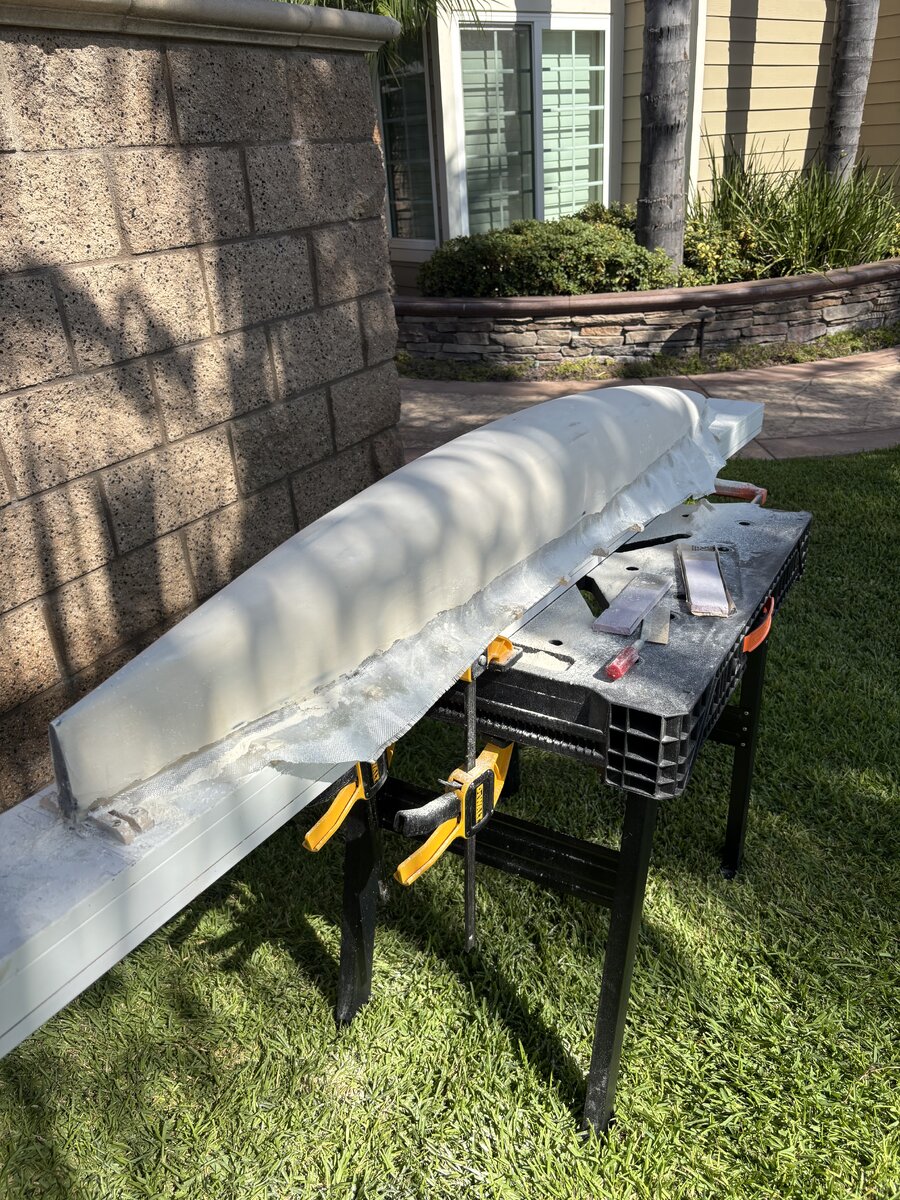
First half of the hull mold.


-
Can someone provide some good steps/advice/tips for creating the softer, streamlined front of the bow? What material is used? Is it shaped somehow once applied?
-
Thanks John. Again, I truly appreciate the experience and advice you've been providing. It's invaluable, especially the "sailing my 6th attempt..." comment. Re carbon, absolutely the best choice for something competitive. There are a couple of determining factors that are in play for me right now: 1) My wife was diagnosed with interstitial lung disease (ILD) two years ago which forced us to relocate to an area where we could get the best medical help (UCLA in Southern California) for her. Thankfully, she's in much better health now than when she was diagnosed but I'm much more appreciative now of what I breath in than I was before her diagnosis. I've done a considerable amount of aircraft composite fabrication and was probably less cautious back then when working, particularly sanding, exposed carbon fiber. As you pointed out, if done correctly there should be very little sanding of carbon part that comes out of a mold. Wet sanding obviously mitigates a lot of the carbon dust creation as long as it's done outside of your shop. 2) The expense of the materials, specifically the lighter weights of carbon cloth, for these early hull experiments is prohibitive. Not to say that I won't use them once I get my molding process sorted out and a few benchmark hulls created from less expensive materials. Frank, you will be getting royalty checks for these. I wanted to be open and up-front about the successes and failures in this build. Hopefully someone following along will be able to not make the same mistakes or at least learn from mine. The plug for the mold gets a coat of 2k epoxy primer today, 24 hours to rest, and probably another coat after that and then the mold-making can begin. I'm excited. Mike
-
And lots of filling and sanding.
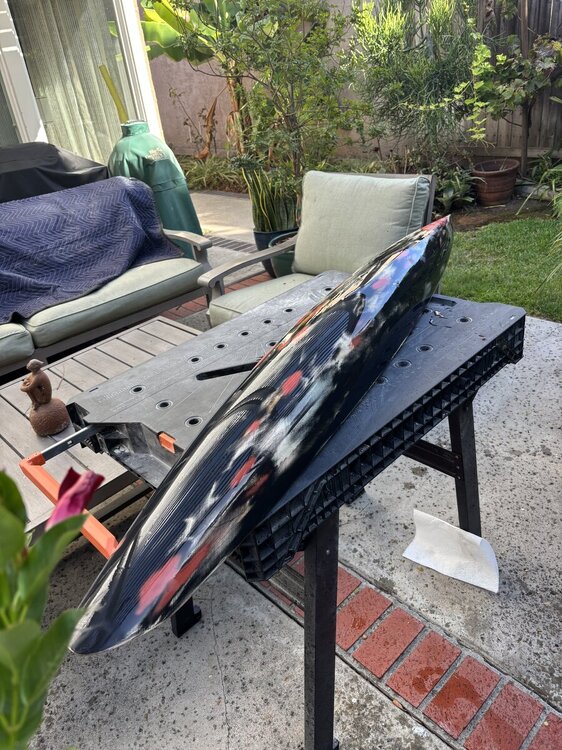
-
Things went pear-shaped when I went to add the glass and carbon cloth to the inside of the hull. A test run was done with dry cloth in the vacuum bag but the sides of the hull bowed in a bit so that wasn’t an option. The backup plan was to do a hand layup and that led to too much epoxy and a lot of extra weight. The Divinycell core material is great stuff but this was just the wrong use of it. I made a test deck and transom with it and they came out light and strong. All that said, the hull is now a plug that molds will be made from. If you’re wanting to build a P4, I would suggest planking the hull with western red cedar or one of the other proven materials instead.
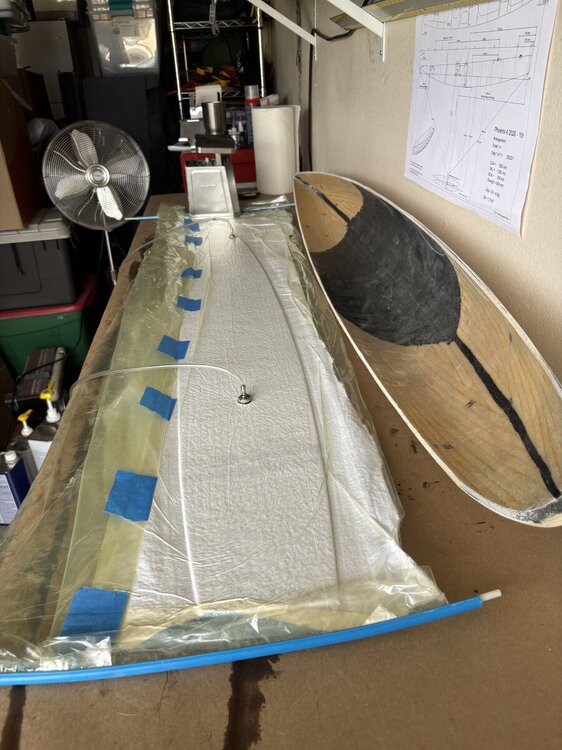
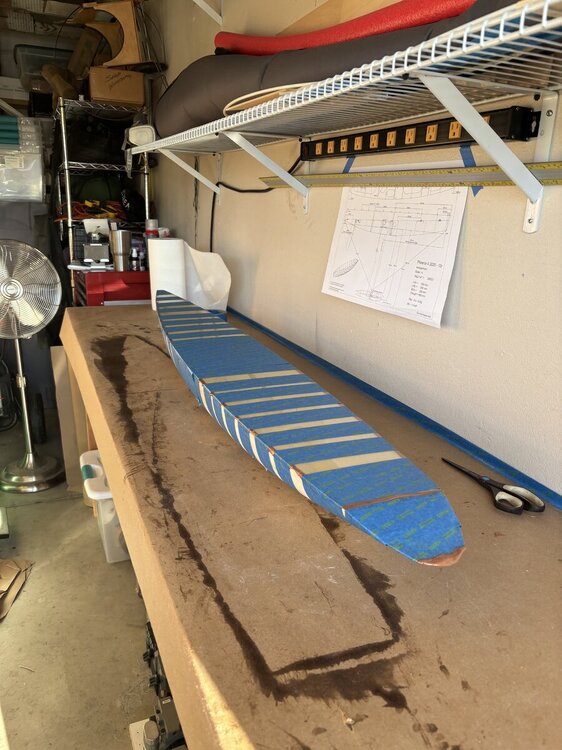
-
And a sneak peak at the insides. Not a lot of extra Titebond or epoxy wicked through.
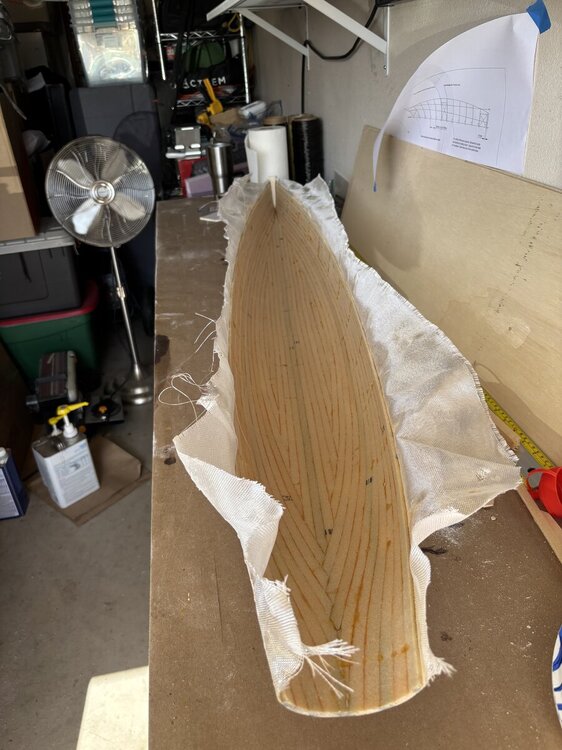
-
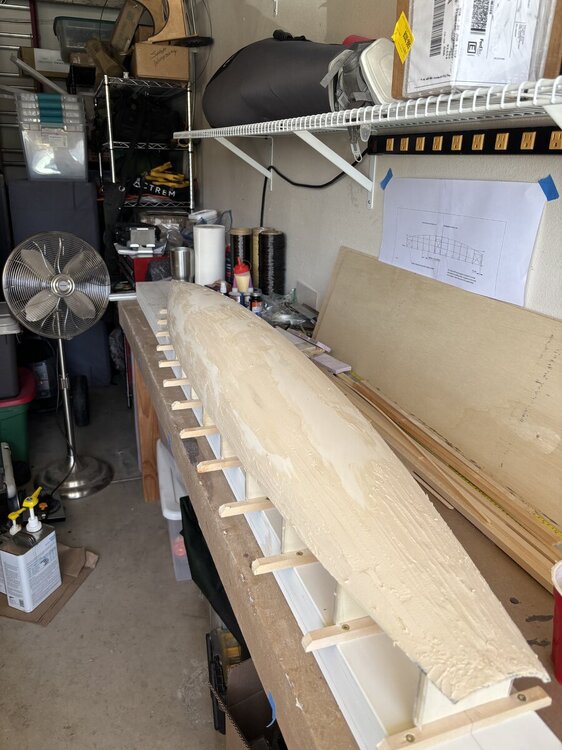
Round 2.
-
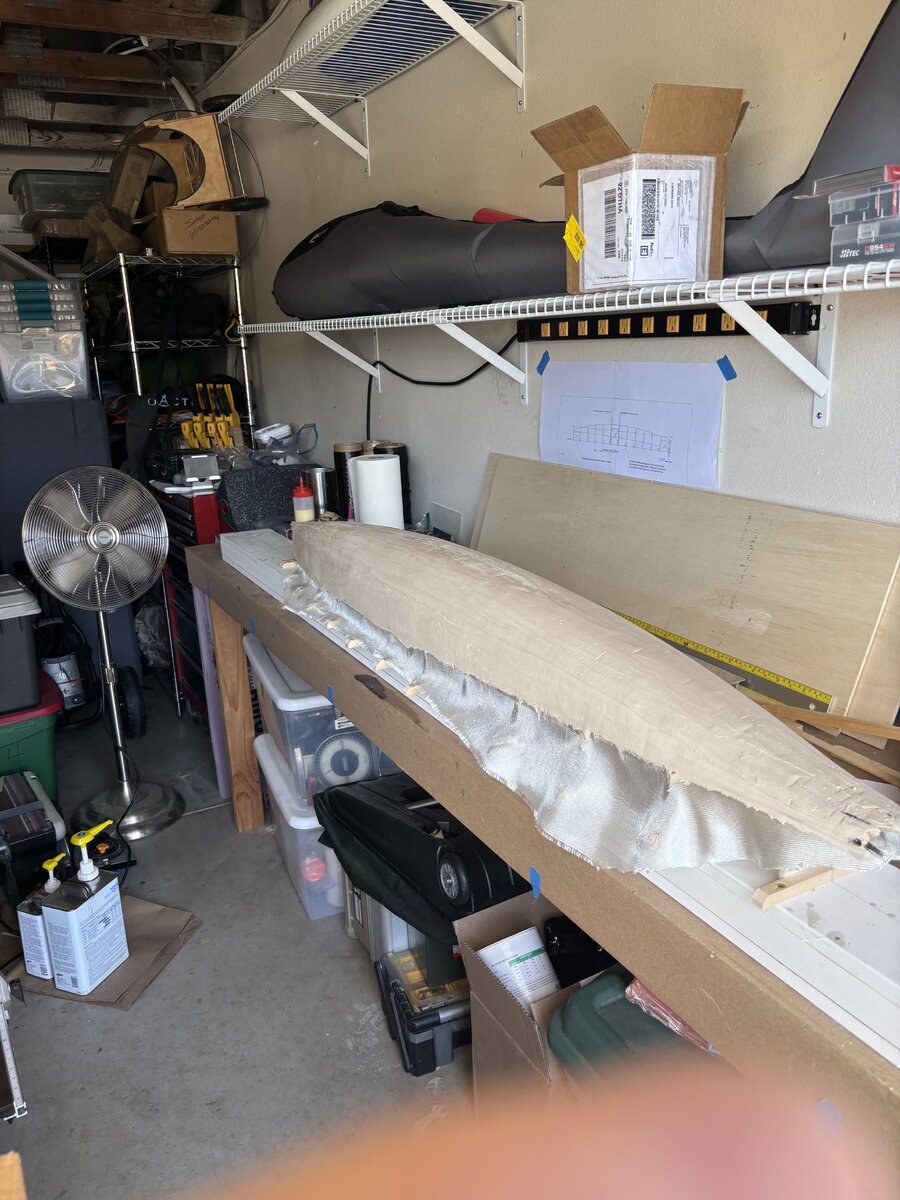
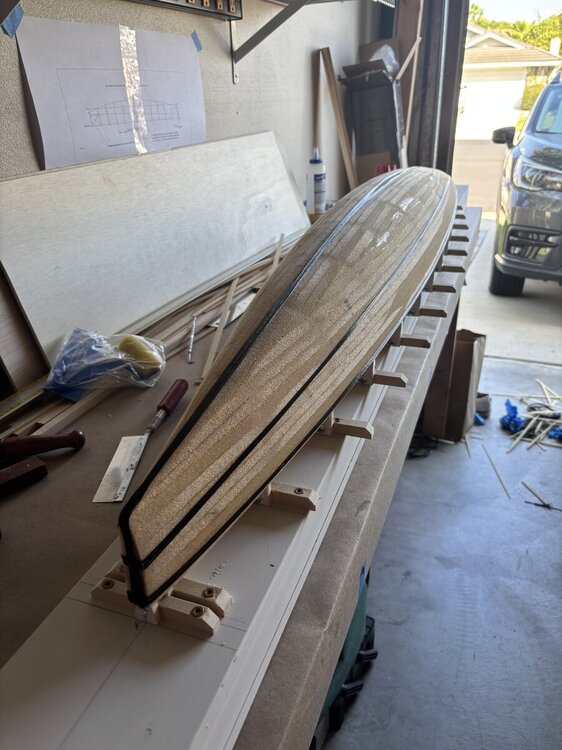
The usual “sand most of it off, add more and repeat” process. Pleasantly surprised that the first go-around wasn’t too bad.
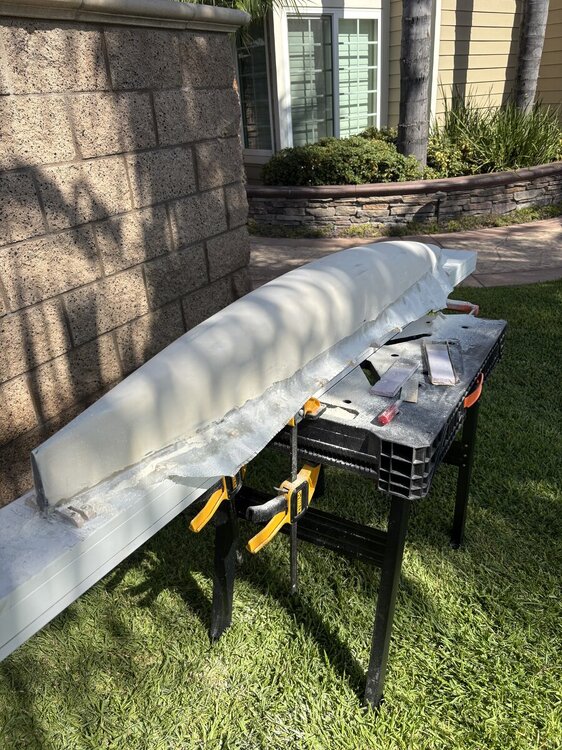
-
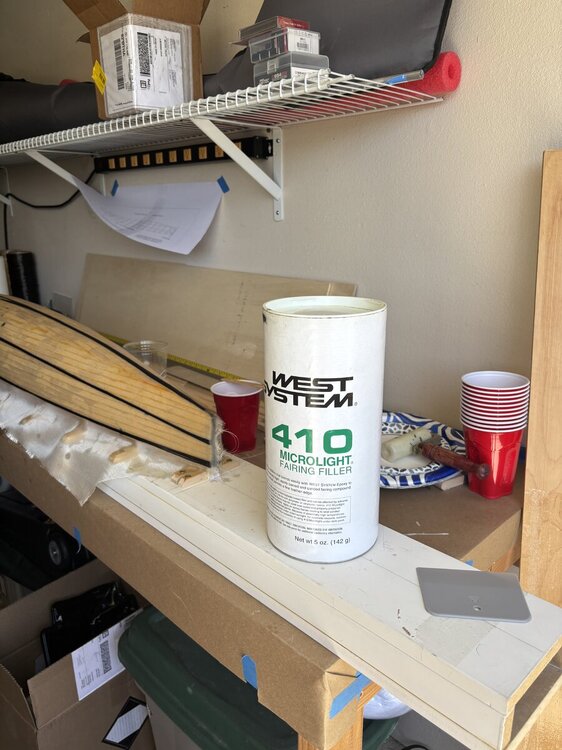
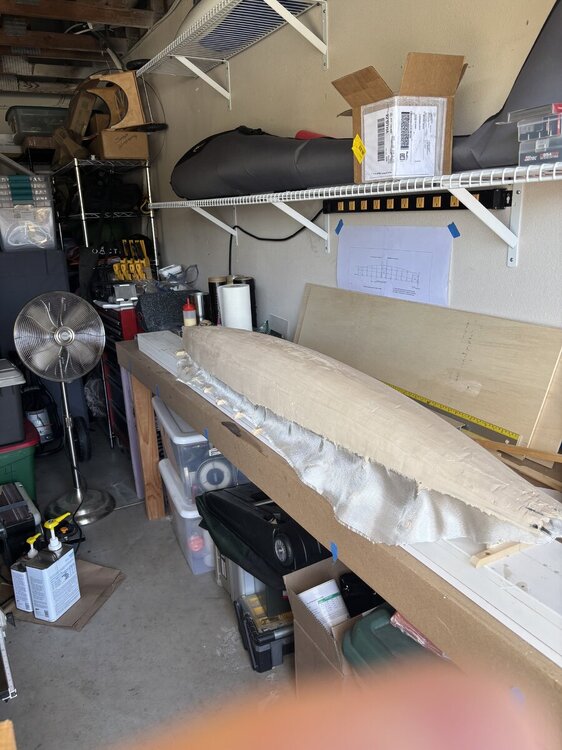
A light shaping/sanding layer was added after the glass layup got tacky to the touch. This has become a bit of a monologue but I’ll need some help once I start arranging things inside the hull. Thanks again for following along, Mike
-
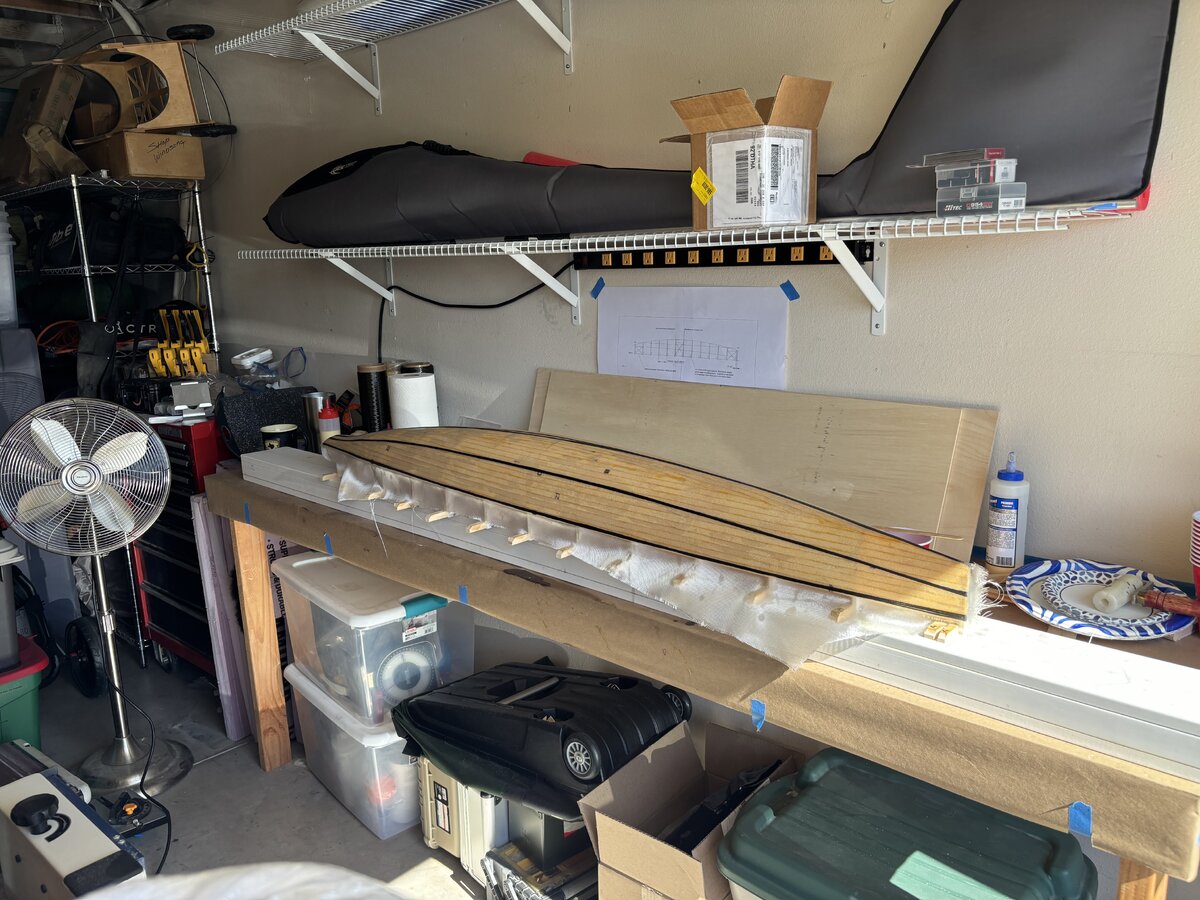
Added carbon reinforcements and 4 oz structural glass outer layer. West Systems 105 epoxy and 209 hardener readily available and forgiving for this type of hand layup.
-
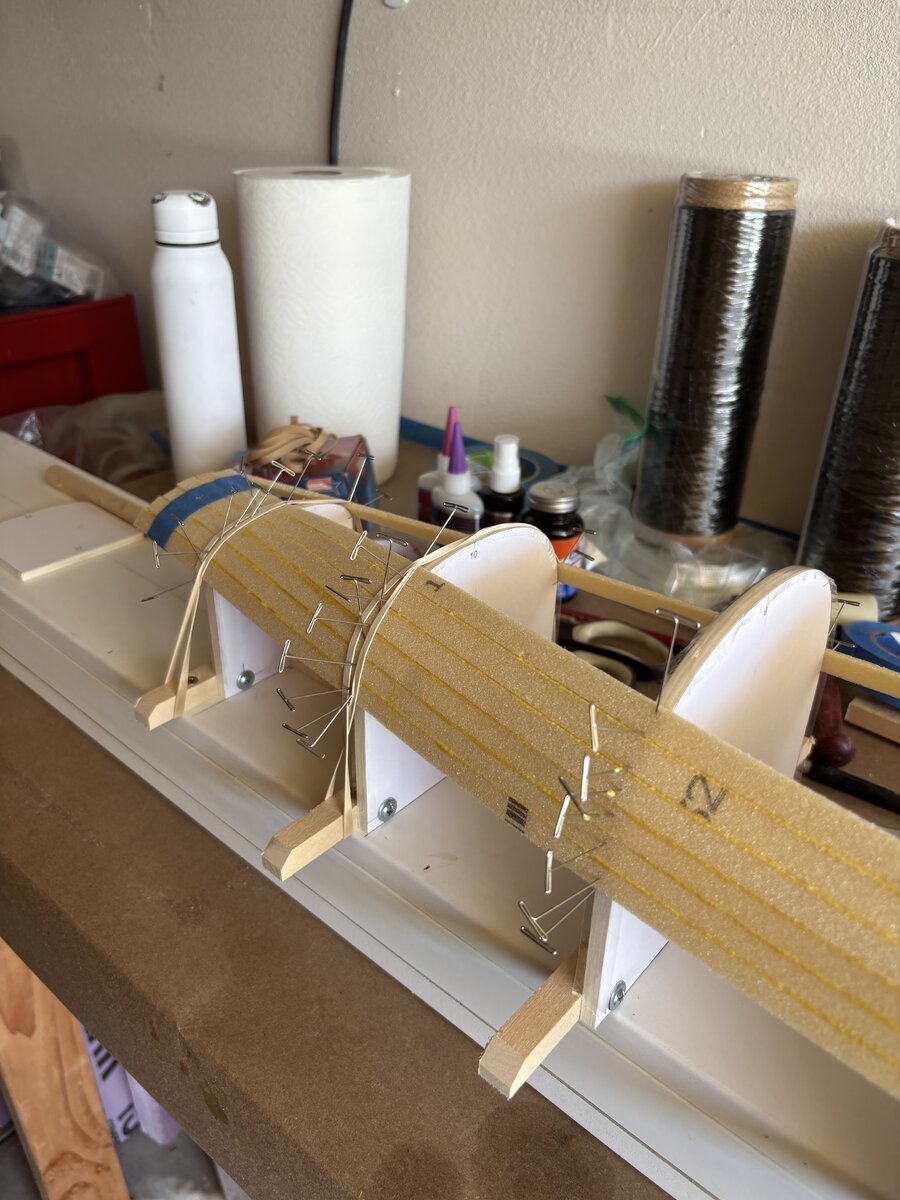
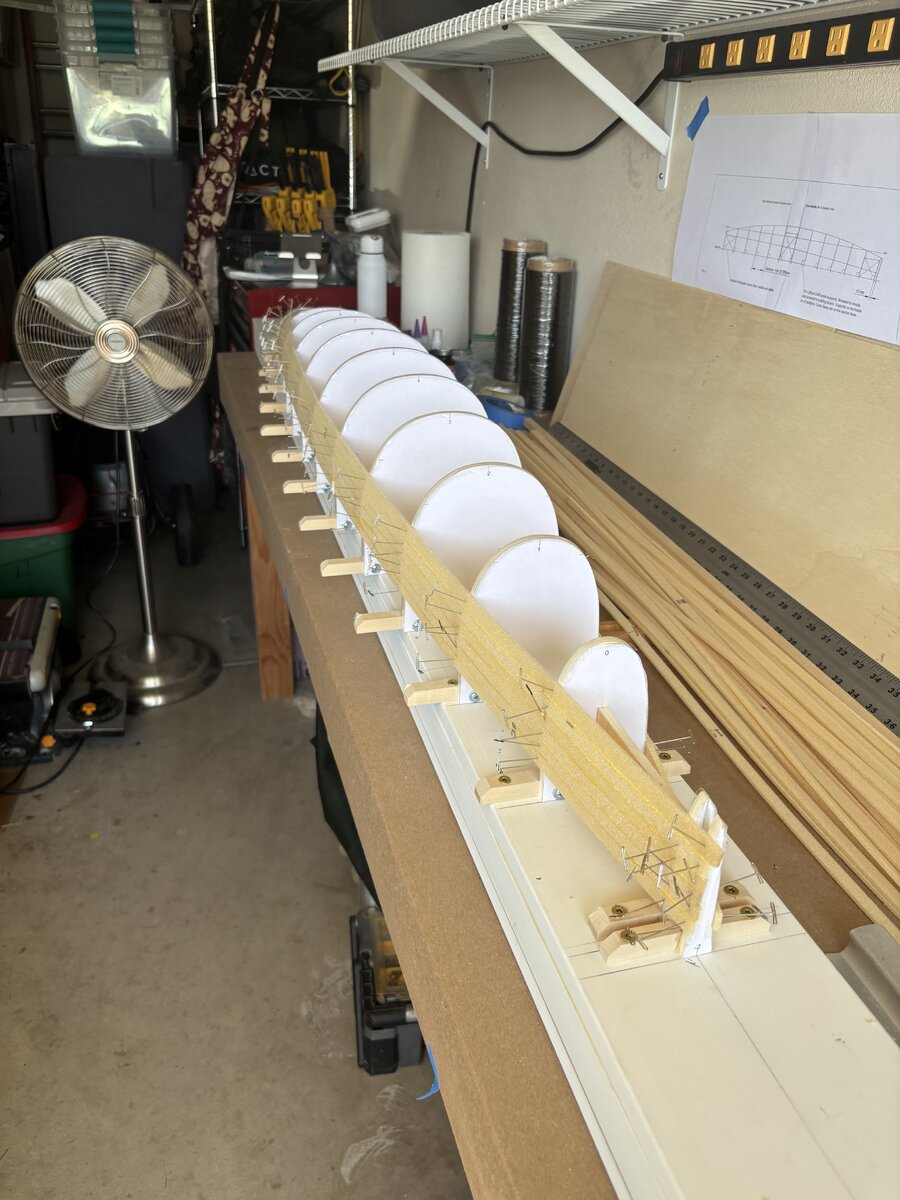
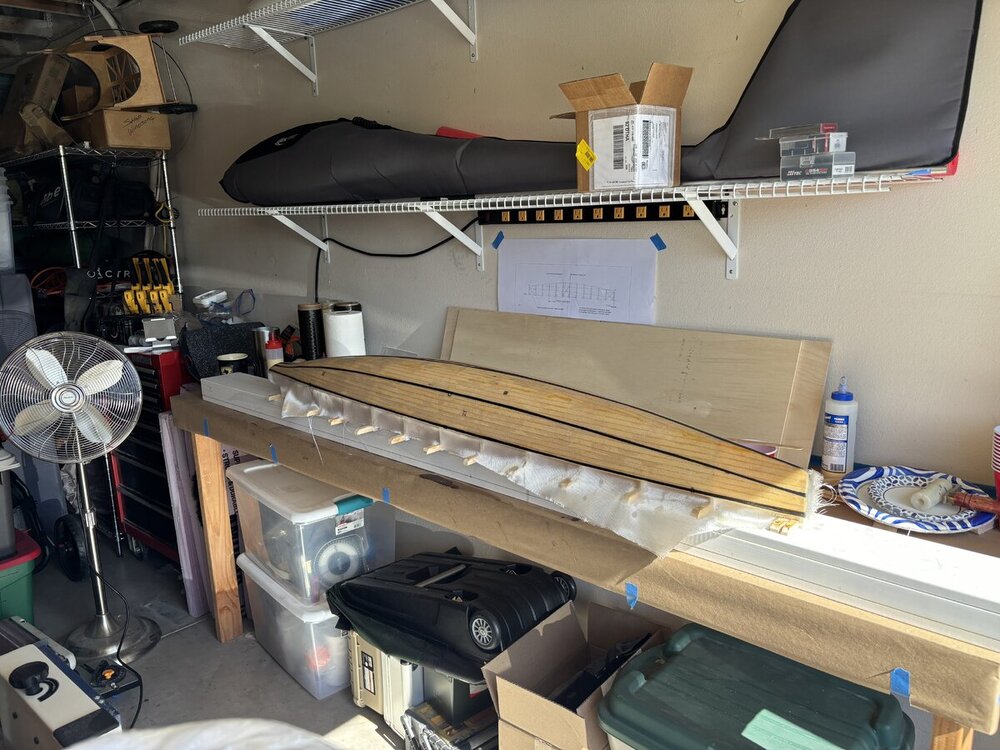
And more planking.


-
And the planking.


-
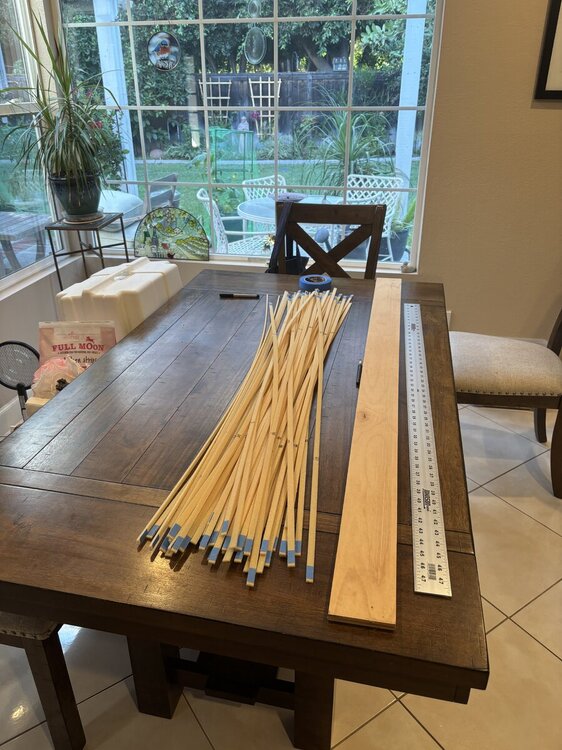
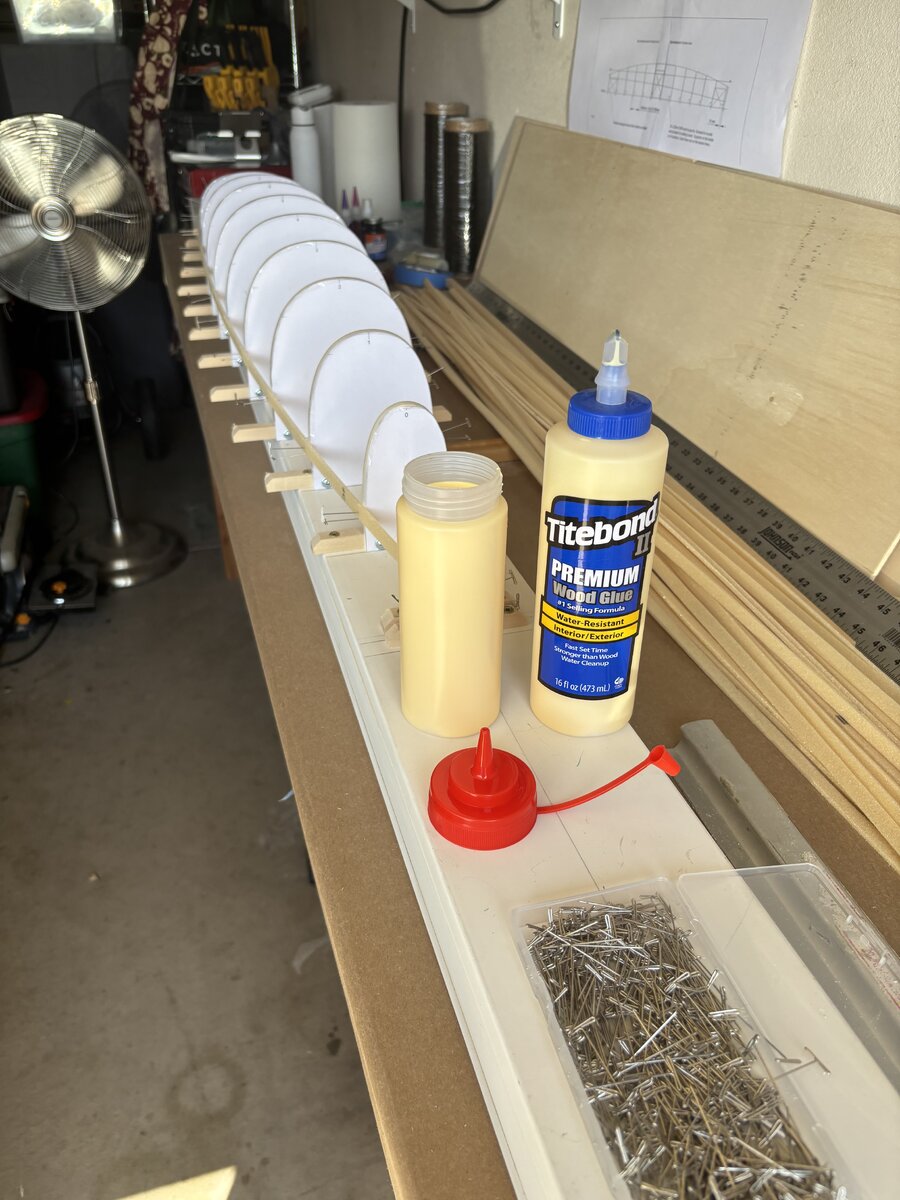
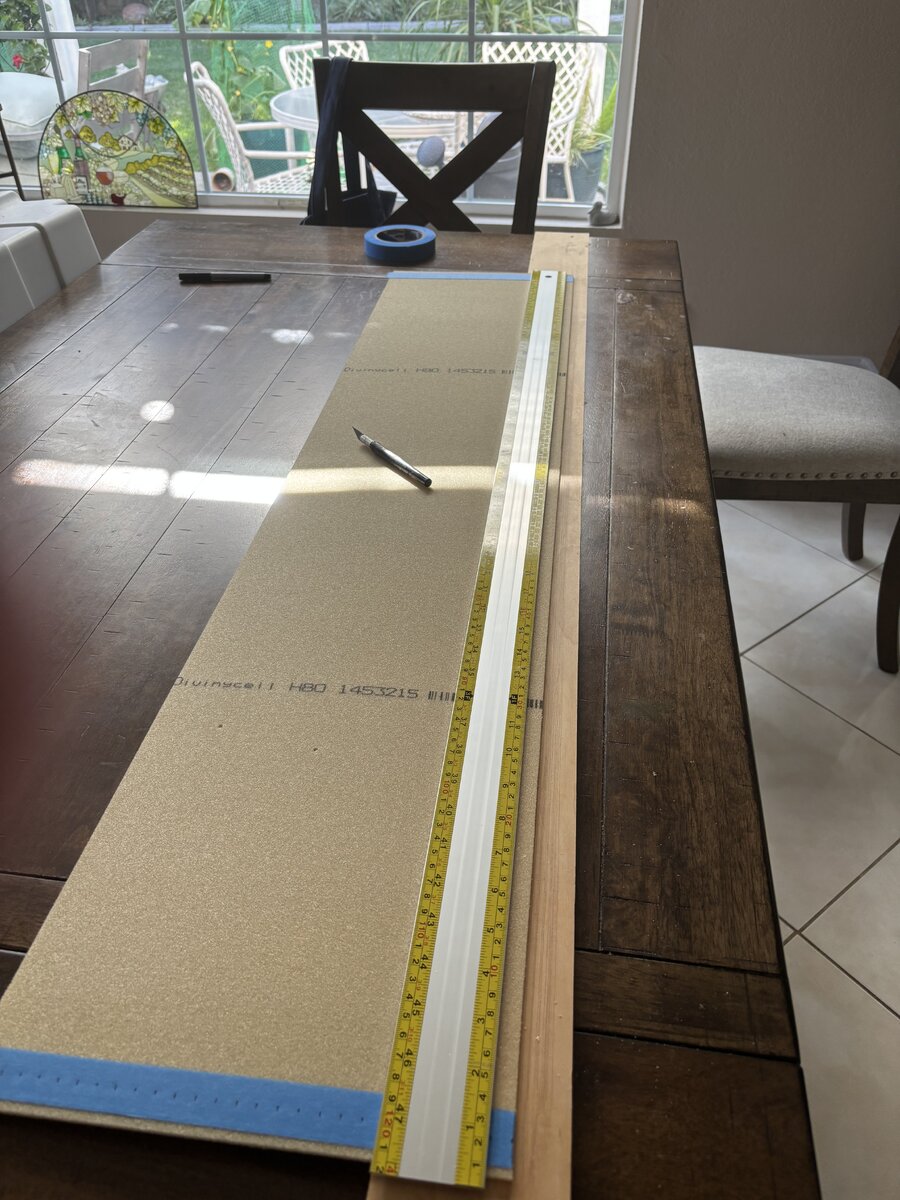
Divinycell H80 cut into 10mm strips and spliced to create full-length planks. Strongback formers protected with packing tape.