Craig Richards
MYA Council
-
Joined
-
Last visited
-
I will put something together about my different boats in the near future, but even though I come from a engineering background I have abandoned the very scientific approach to boat design. The first boats I build from a new male plug are really ideas stolen from what seems to be fast. The plug is an average shape, but then gets auto filler added and sanded off until I have added a few personal touches, but really these can only be a few mm here or there different from the current top designs. The real test is then to take it sailing and find the weak points. I feel my first boats never have enough buoyancy and I always end up adding more filler to the plug for each subsequent hull. I try to aim for a maximum waterline beam of about 150mm and a canoe rocker of about 56mm. The volume distribution curve should peak at about the 66% mark and the prismatic coefficient should be as high as possible (volume in the ends). The boats when floating with the stern and bow just touching probably displace about 4.2 kg. I use Robot fins. The back of the mast should be about 12-14mm in front of the fin and the fin has a 5-10mm sweep back from the vertical measured at the bottom. I am not sure if there can be any more design breakthroughs as the Britpop has not really been improved on an is still possibly the best all round boat available after more than 10 years. That being said we thought the same in paragliders when we were gliding at a L/D of 8 and the latest are over 14! Brad is currently sailing a TS2 and winning even in the light, so perhaps there could be a surprise with wide skiff type boats again. If I am stupid enough to start another design process then I would probably try the very narrow route with about 135mm on the waterline and shapes tending towards the last IACC non-foiling boats. They got squarer and flatter over time -> https://www.sail-world.com/Australia/The-AC-Finalists-Arms-Race-who-has-the-edge/-34184?source=google Or something really silly like this -> https://thomastison.com/scow-hulls-part-1-the-pros/

-
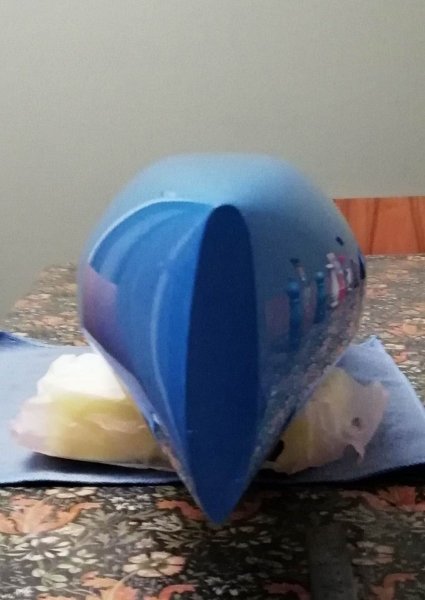
Hi Martin, congratulations on your new build. I have built a few boats of my own design and learnt some hard lessons. I think the immersed bow is going to spoil what is otherwise a very promising design. The static waterline (floating upright with no wind) is never the same as when the boat is actually sailing. The high rig means a high centre of effort for the sails and this tends to push the bow down another cm or two upwind and even more downwind. Although modern designs float with the bow clear of the water, when sailing with a bit of pressure the bow is ideally just kissing the surface giving you the full immersed length you are looking for. An immersed bow will also compromise the handling upwind as tacking will be sluggish. Another effect, which could just be my imagination is the effect on the bow wave. With the bow in the water the water climbs up the hull quite noticeably on the weather side so that you have this extra mass of water in contact with the hull, which requires energy to be pushed out the way and adds drag from the extra wetted surface area. The raised bow stops this from happening although its still noticeable with a fine rounded bow. The new broader flatter forward sections of the Venti and K2 keep this effect to a minimum. Although buoyancy up front helps keep the bow up downwind I don't think it has as much effect as people imagine. The 'secret' of the more modern designs is to take a leaf from the Widget and move more volume behind the keel. This allows the keel to be further aft and also gives you a very 'light' bow. If you sail the boat and find it not quite right, rather than immediately scrapping the hull, experiment first by simply cutting the front third of the hull below the waterline and replacing it with a more flat section and get the bow clear of the water surface. Something like the attached file. Then add balsa to add volume at about the 70% (of hull length) position and move as much weight in the boat further aft if possible. Brad's development process for the Britpop involved multiple iterations of earlier designs with volume being added to existing hulls to find the design he wanted. Best of luck Craig