All Activity
- Today
-
Just back from holiday, sorry for delay. Located in Poole. Best to see the boat first.......
- Yesterday
-
The windward mark was never set further than 65m from the bank at the 2026 Worlds, as measured with a range finder. I was in the rib. It was mentioned before the racing started that this was the distance from the bank.
-
YACHTING MONTHLY CUP Model Yachting’s equivalent to the “Americas Cup” In 1922 there was an active model yachtsman in the London area, Bill Daniels, who challenged “any model yachtsman world wide” to meet him in a race or series of races. He convinced his friend the editor of the sailing magazine Yachting Monthly, to donate a trophy for this contest and the “Yachting Monthly Cup” annual event was born. The yachts used for this challenge, which we now know as A class, were built to a formula, devised by the editor and Bill, and was loosely based on the 6 metre rule at a scale of 2 inches to the foot, and produced boats with an overall length limit of 19 feet 6 inches! although most were around 6 feet in length. The class was called the “Yachting Monthly 6metre” There was a club founded for this class The YM6mOA (Yachting Monthly 6 metres Owners Association) was founded in 1924, probably by Mr W J Daniels at the Rick Pond in Home Park Surbiton, south London. This club still exists but is now known as Hampton Court MYC. The first event was held at Gosport MYC in 1923 and was won by Bill himself sailing a boat he had designed & built for its owner J Scott Freeman a solicitor and keelboat sailor from the Upper Thames YC. Daniels went on to win the next two years securing the YM cup outright for his owner Scott Freeman, who donated the cup to the UTYC for competition in 14 foot dinghys, where it remains to this day. That could have been the end of the story, except that Yachting monthly very kindly presented a further very grand silver cup in 1926, which cannot be won outright and this trophy is still raced for to this day. The Yachting Monthly Cup centre. The Cup was challenged for every year in a similar format to the America’s Cup with the previous winner defending and a new hopeful skipper challenging. Many Americans challenged unsuccessfully as is reported below from a story in an American Model Yachting publication. In some articles, John Black, who had represented USA on several occasions, was described as the “Sir Thomas Lipton” of the model yachting world, in that he failed to win the Cup, time after time. According to a later article in Marine Models of 1937, this point was echoed: “a well-known model ”. yachtsman has said that this Cup has caused as much grief to America as the America’s Cup has to England The point being made here is that it was a period (1923–1948) when America would dearly have loved to win; it was by far the biggest challenge in model yachting. A win for Bill Bithell and Fred Pigeon in 1948 on British waters would be momentous indeed. This is just what happened. The Event continued every year and reached it’s zenith in its 50th anniversary year, 1973 at Fleetwood when 56 competitors raced for the MYA National Championship and 13 boats from 8 nations challenged for the YM cup. As time passed interest in the A class fell but the National Championship survived and celebrated it’s centenary in 2023 at Gosport. Although the large number of entries are a thing of the past, there are a dedicated number of about 20+ boats racing each year with many 2 & 3 generational families taking part. The 2nd YM Cup which celebrates it’s own centenary this year is still raced for, although not in it’s original challenge format. In 1986 as overseas entries dried up, the event was changed to a knock out competition held on the Wednesday of the Championship week, and was won the first time by a boat from Portugal! The Fleetwood club, the centenary hosts look forward to welcoming as many boats as possible to the centenary celebration regatta. Derek Priestley President Fleetwood MYC & MYA

-
Pierre joined the community
-
Entries are now open for both A National Championships, and they're coming in steadily. have you entered yet?
- Last week
-
Paul Doidge joined the community
-
I have some well used unidentified masts stashed away. If you give me the dimensions required I will have a look next time I have a rummage. Cheers Trevor
-
Wanted A class Groovy carbon mast Maximum height for vane A. Andy Fernie 07779939583 yotter@yahoo.com
-
Gary Dickens, That would be amazing. In 1976 there was a tie for 1st place between David Andrews (Whirlwind winches) and Derek Stevenson resulting in a sail off for the trophy with everyone watching. A much better, more exciting way to settle a tie than today's countback!!
-
Kevin Leverington joined the community
-
Might be able to get hold of a Bloodaxe.....
-
Are our issues course distance related, venue related, skipper behaviour related or umpire standard related? A short answer: Yes, the issues are course distance related, venue related, skipper behaviour related AND umpire standard related! In an ideal world: An ideal venue would allow marks to be set at no more than 60m to the shore, yet allow for a decent windward leg, in all common wind directions. Setting a course with the wind coming off the shore, with trees or building obstructing the wind flow, will never be a good idea. I would argue that, in reality, the number of venues suitable for a World or Continental Championship is very small. Competitors would sail conservatively to avoid risky manouevres, and take a penalty when they may have broken a rule. There are still some sailors (even in a Worlds A heat who NEVER take a voluntary penalty but wait for an umpire decision. Major radio sailing nations would insist on national and some regional events being umpired, so that there was a far large reservoir of experienced umpires available for Worlds and Continentals. For my part: I recognise that my umpiring is completely different when I am following the part of the fleet near the shore. I can follow most incidents among the 6 or 7 boats I am following. When I am following the boats outside: I cannot read sail numbers of boats beyond the outside start mark, of the boats that tack away from the shore, nor the boats on the layline coming in to the windward mark. This also means that I, and most sailors, cannot judge laylines nor rapidly analyse relative speed, angle and distance between these boats. This means, for instance, that,if I cannot accurately judge the distance between two overlapped (and incognito) boats, how can I decide if the outside boat has not given enough mark-room to round the mark without touching it. During the Worlds , the RC made a real effort to keep the windward mark within about 75m of the shore. This meant that I, my colleagues and nearly all the observers we worked with could read the sail numbers when boats were approaching the offset mark! Windward gates provide a partial solution, in that there are (usually) fewer boats rounding each mark. Outside-in gates create a further zone with a high potential for incidents a few boat lengths down wind from the gate. We may have to change our umpiring strategy by placing an umpire to observe this area, which may mean that there will be only one umpire for both leeward marks!
-
Identify the culprits, two strikes and you earn a demotion with a DSQ score.
-
Gates, gates and more gates, add to that a couple of outer buoys to add a little more luck to which course you opt for. Won't be long before we just forget the adrenalin filled racing part of the sport and just set boats off every 30 seconds and just do time trials. Hang on there, I may of stumbled upon an idea here, time trials with no promotion or relegation, surely not, well maybe just for the seedings? Concentrate on ways of identifying the culprits and bringing them in line instead of watering down what we love, racing around, not boring sailing around.
-
Barry T joined the community
-
Scott Neale joined the community
-
Ronald Clark joined the community
-
Iain Thomson joined the community
-
Stuart Yates joined the community
-
Chris Maher joined the community
-
Jack Stockford joined the community
-
The inside out gate used at the M/10R Worlds with additional spreader marks turned downwind legs at that race into pure lottery. The beauty of what we do is that clever tactical racing is and should be rewarded. Do we want to further dumb down the sport by having a close race between 2 competitors choose gate and spreader options (under a weather bank) to round near 25+ metres apart and see who is lucky enough to get the unseen gust through trees? Without the other having any chance to attack or equally defend, this is not racing. All of this because we either don’t know how to overlay a windward mark in waves and wind for a clean rounding or don’t respect our opposition enough to take a transom? We can all get it wrong, but persistent offenders are not that hard to weed out at bigger events if willing. Weeding the club or local offender (bully) maybe not so easy…. Yes we want a clean race, but it should still be a race that rewards race craft, not further increase of luck. Regarding Umpire use of R2 and having to have a level of certainty, why did they not use a video option if in doubt as they were happy to ‘selectively’ use for an early incident? As for distances, of course nobody wants an eyesight test. The reports from the last IOM Worlds in Australia paint a mirrored picture of any umpiring issues being blamed largely on distance. What was conveniently overlooked was the start/finish line being within clear view of a raised platform of skippers where the largest number of unpunished rule breaches occured worthy of R2 hearings. Are our issues course distance related, venue related, skipper behaviour related or umpire standard related? It might be worth a bigger look at how all areas can be improved not just throwing people under buses….
-
I was at both events and personally favour an in/out gate with a set of spreader clearing marks. If we are honest, all options can create issues due to the control area and its proximity to the marks of the course with the prevailing wind direction. This is one of the limitations of our discipline. The higher the level of competition the more that the windward marks become an issue, the boats and skippers tend to be matched more equally and the competitive spirit higher, leading to more skippers arriving at the same time and more carnage and frustrations. We all know the issues and all fall foul of a misjudged lay line and the resultant pile ups, although never our fault!! If correct then the windward gate should reduce this by offering two options splitting the fleet, however as we know the gate tends to be used when the course setting is not easy so getting a fair split becomes difficult. To minimise the unequal gate they are usually placed closer together which then pushes more of the problem to leaving the mark. IMO the clearing mark option with an In/Out gives a further option to split the fleet equally as these can be offset to allow the gate itself to be within a visible range, and using the clearing mark to create a more equal next leg of the course. Pierre and team did this very well in France IMO and is the option I try to use when setting a course in difficult conditions, although it does then require more vigilance by skippers and race team to police.
-
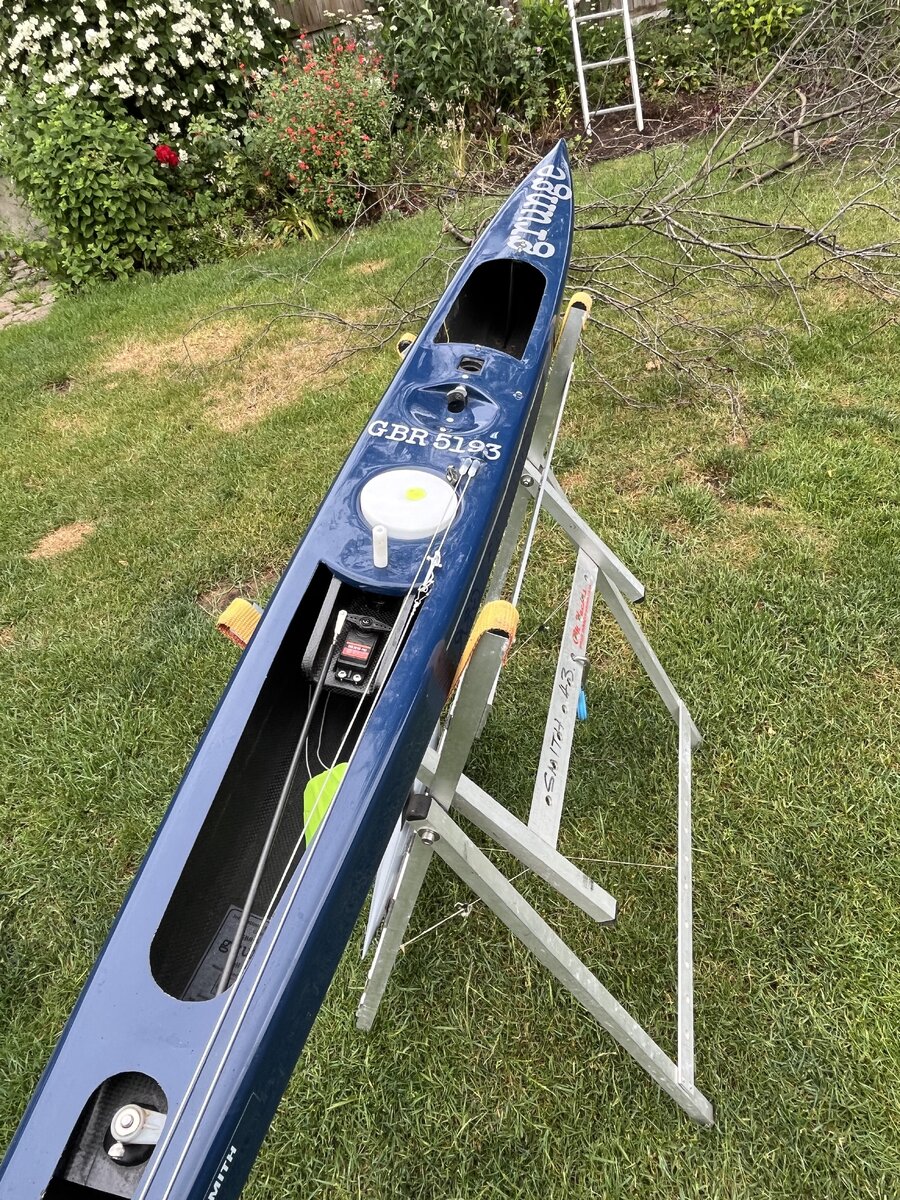
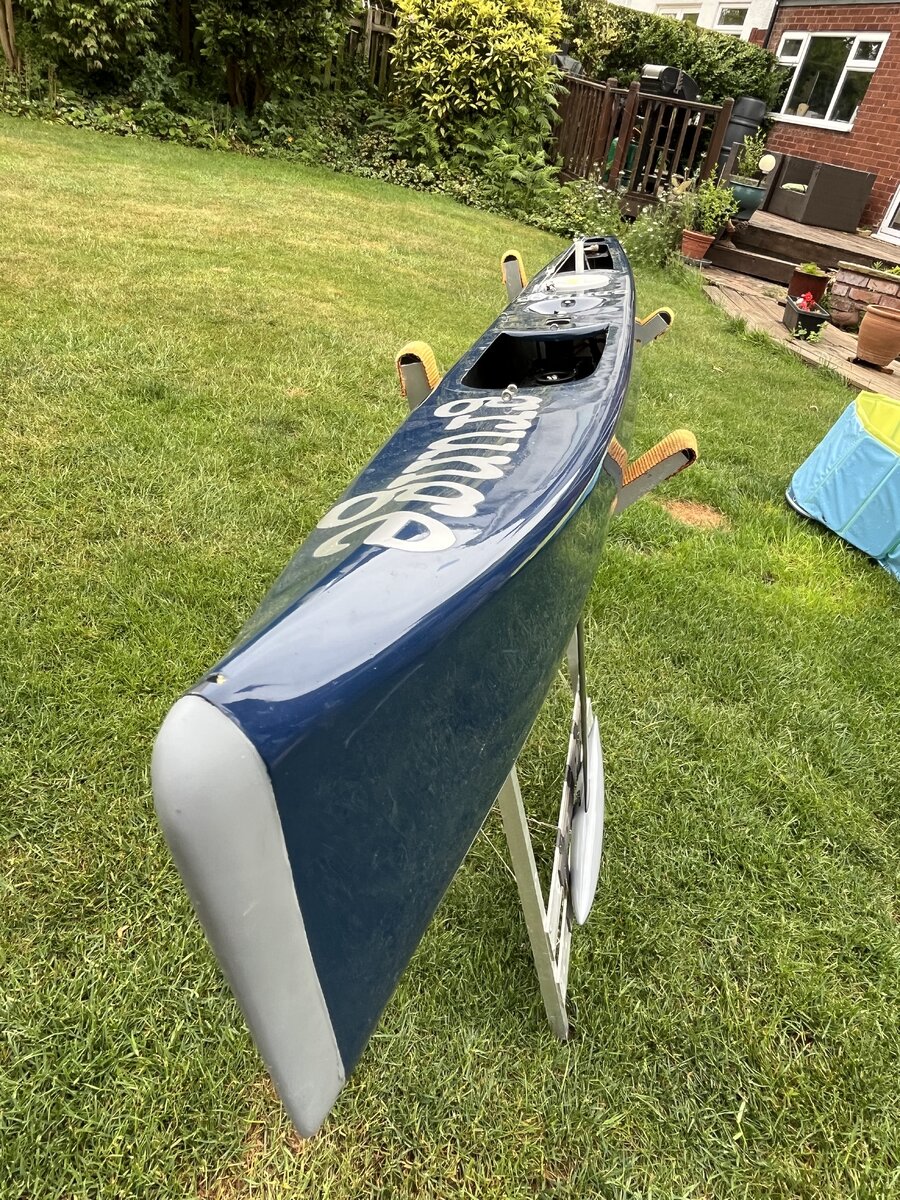
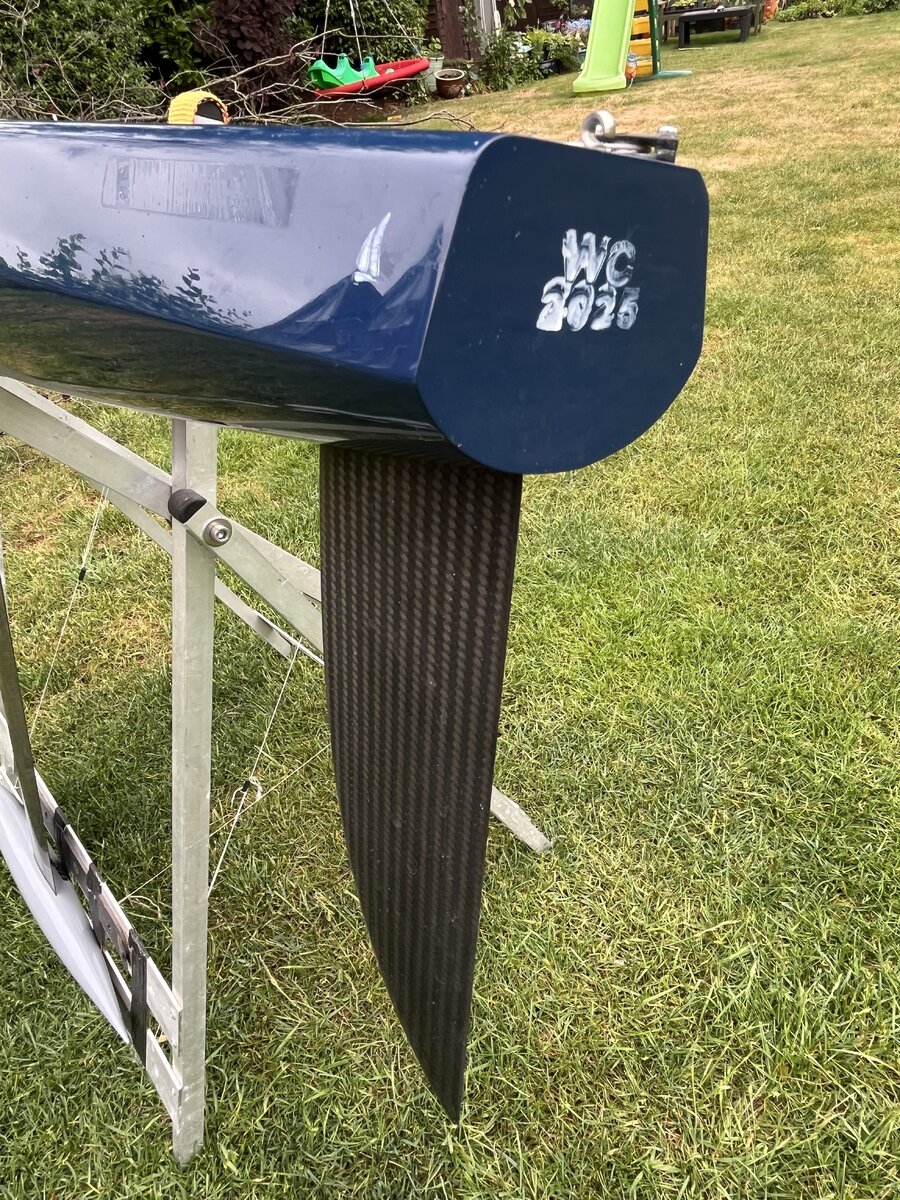
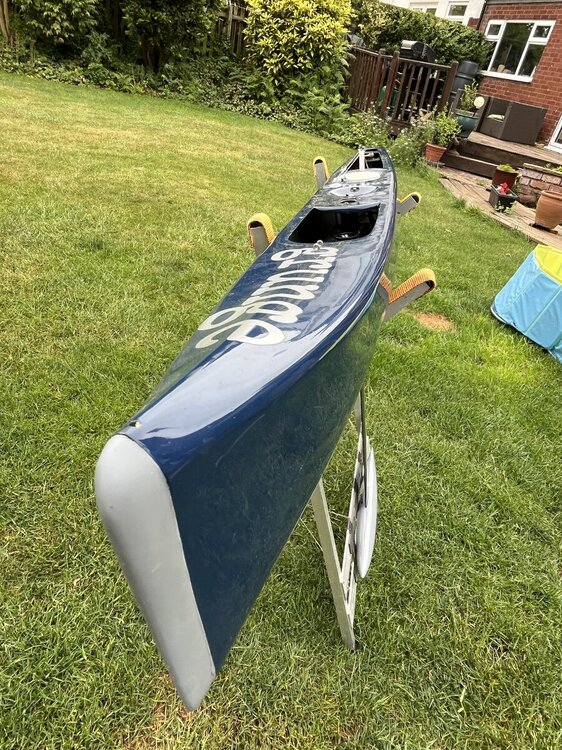
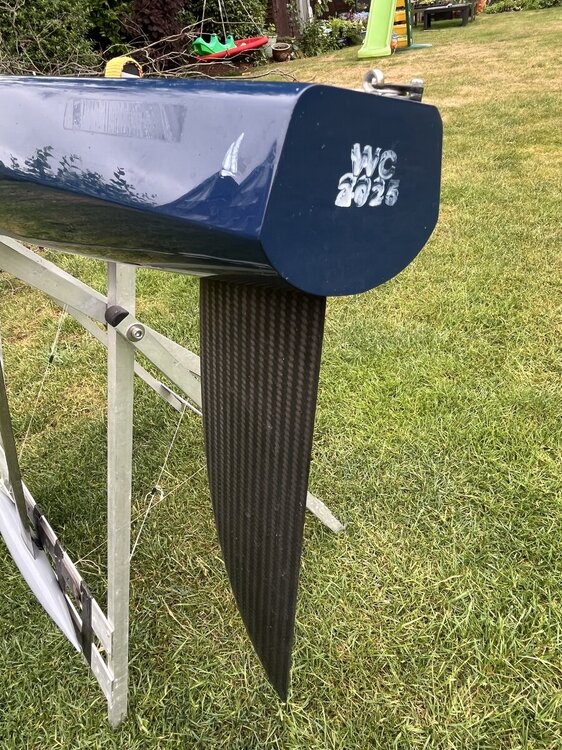
Built by Robot Yachts in 2018. Hull No 10. in Dark Blue . Spare rudder. RMG winch and JR rudder servo. A swing rig with gizmo. B, C, C2 , C3 pocket luff sails by Brad Gibson. Sail box. All in excellent condition! Boat stand , boat and keel bags. £4250 Email jjsmith61@icloud.com
-
When using the inside out gate with offsets on each side we observed that most boats made a starboard tack approach. The result: two lines of boats each on the layline to the mark. The boats on the leeward layline could bail-out by tacking, those on the windward layline by bearing away. They would then round the opposite mark, passing a short distance to windward of the mark, avoiding any congestion.
-
It would mean a lot of boats coming on starboard layline across between marks, worse for downwind boats...
-
https://www.airbnb.co.uk/s/homes?dynamic_product_ids%5B%5D=1173826328498577944&omni_page_id=36021 New airbnb house on Fleetwood promenade half mile from lake. 47 the Esplenade. 5 bedrooms 3 bathrooms spectacular sea views from Gin & Tonic balcony Recently tested & approved by Gosport MYC classic & vintage marblehead sailors!!
-
If we must have a windward gate (not a big fan) then maybe we should just have both windward marks as port rounding, for the obvious reasons.
-
Vision IOM GBR 4760 built by Phil Playl with RMG 280ES winch absolutely stunning condition with current measurement certificate comes with, No1 Rig French PG 11mm mast/boom Sailsetc ballraced gooseneck and fittings Catsails sails. No2 Rig French PG 11mm mast/boom Sailsetc gooseneck and fittings plus ballraced jib fitting, Catsails sails. Flawless fin/bulb and rudder Rig box included Just add radio gear and go sailing XXXProvisonally SoldXXX
- Earlier
-
Good afternoon, Is the boat still available and if so, where in Dorset are you? Also, is your price negotiable? Many thanks. R.
-
Thank you Derek for pointing us in the direction of one key point in the discussion. He refers to the issue of identifying boats. Many of the issues encountered at the windward mark disappear or are significantly reduced if all sailors and race officials can see what is happening! If all participants can easily read sail numbers this means that they can also better judge: Laylines The distance between overlapped boats Whether boats are on a collision course When the marks are set too far away, umpires and observers spend a great deal of time just trying to read sail numbers, in case there is an incident. This is especially the case for the umpire watching the far end of the start line. At Datchet there was hardly a start at which umpire and observer could read the sail numbers of boats beyond the outside start mark. There are particular issues at the windward mark when it is set more than about 65-70m from the control area and the fleet is sailing from right to left. Boats on port are sailing away from the shore and the sail number is invisible. The boats approaching on starboard cannot judge accurately if they are on the lay line, above it or below it. So we have, for the observer or umpire, two orn more unidentified boats heading towards the area around the mark (NB, in certain lights at Datchet even hull colours were difficult to see). The worst pile ups at the windward mark in these conditions are frequently caused by the starboard tacker, realising, when they have already entered the zone, that they are below the layline. If they are only slightly below, they may attempt to luff, causing boats outside and astern to also luff and slow, even stall. Otherwise the boat (still unidentifiable from the control area) will tack and aim for a gap that may or may not exist. If the gap does not exist, chaos is almost guaranteed. Even if the observers and umpires can follow the (unidentified) boat until the sail number is legible (often just before or after the offset mark) the damage has been done. The race has been ruined for several boats. There is also an issue with umpiring culture. Umpires will not penalised a boat unless they are certain that the boat has broken a rule.They will need to be even more certain before giving a penalty under RRS 2, Fair Sailing. The obvious solution is to lay marks closer to the control area. This creates other issues, as race officers wish to set a balanced windward leg. When the course is close to the shore, both sailors and race officials can see what is happening. The number of incidents is greatly reduced, and the percentage of incidents resulting in an umpire decision increases. So, when choosing a venue for a major event, a key criteria should be 'can the race committee set courses in all (or at least the most frequent) wind directions with marks less than 65-70m from the shore?' I have come to believe that there are very few venues that can met that criteria. I have been to a few venues that did meet that criteria - Fleetwood (the lake is only 62m wide), Limone (on Lake Garda), Nynasham I hope I spelt that right,) (Sweden , DF65 Globals), Ste Hilaire (only on the far shore, but the distances to walk were enormous) to mention a few. One issue in Datchet, as an umpire I was making a concious effort to walk up as far as possible to get close to the windward mark, to get as near as possile to the leeward gate and to get to the finish line. At most events I would be close to at least the better sailors in the heat. This was far less the case during the Worlds. In particular, many sailors were standing well to leeward of the finish line. I remember one leeward gatemark rounding where there were only 1 or 2 sailors with 50m of me. I think I hailed 4 mark contacts and note 2 marks not rounded. I am fairly sure that the competitors, from where they were standing, did not see the mark contact.
-
I have a Futaba 7C Transmitter and R617FS Receiver for sale complete with manual and original box. Asking price £100. I also have additional Receivers for £25 each. Contact by email. tp.mbryc@yahoo.com Leicesteshire area
-
FLEETWOOD MODEL YACHT CLUB A WEEK & THE CRABBERS Those who attended the Vane A Nationals at Fleetwood in 2024 will remember the problems caused by boats fouling crab lines and sailors struggling to attend to their boats on the bank due to families populating the bankside. In order to try to remove this problem, we at the club have consulted with council officials and obtained permission to “rope off” the lake as much as possible and erect notices to the effect that from Sat 25th July to Sun 2nd August the Model Yachting lake is closed and “crabbing is in the boating lake” There will be at least 20 of these A3 sized notices placed around the lake and at the entrance to the carpark, and on the walkway to the bridge. We hope that competitors will understand that we, the club, with the support of the council are doing everything we can to solve this problem. Thankyou for your understanding. We look forward to welcoming you all to our “9 days of A’s” vane & radio A regatta. Derek Priestley Fleetwood MYC
-
Same answer as Derek, approach mark doesn't help, it just moves the problem.
-
Gents, Nowhere in this discussion have you mentioned the common problem where, with WW & spreader, the incidents where 1 lucky boat gets away and the rest is just a pile up caused by port boats not giving way to stbd. I agree that a mark say 6 lengths to leeward will reduce the problem at the WW mark, but it still creates the same problem at the new mark. (Believe me I've tried it several times) Until the umpires start giving some Rule 2 DSC's to the port boat chancers, (if they can identify them) the problem will never go away.